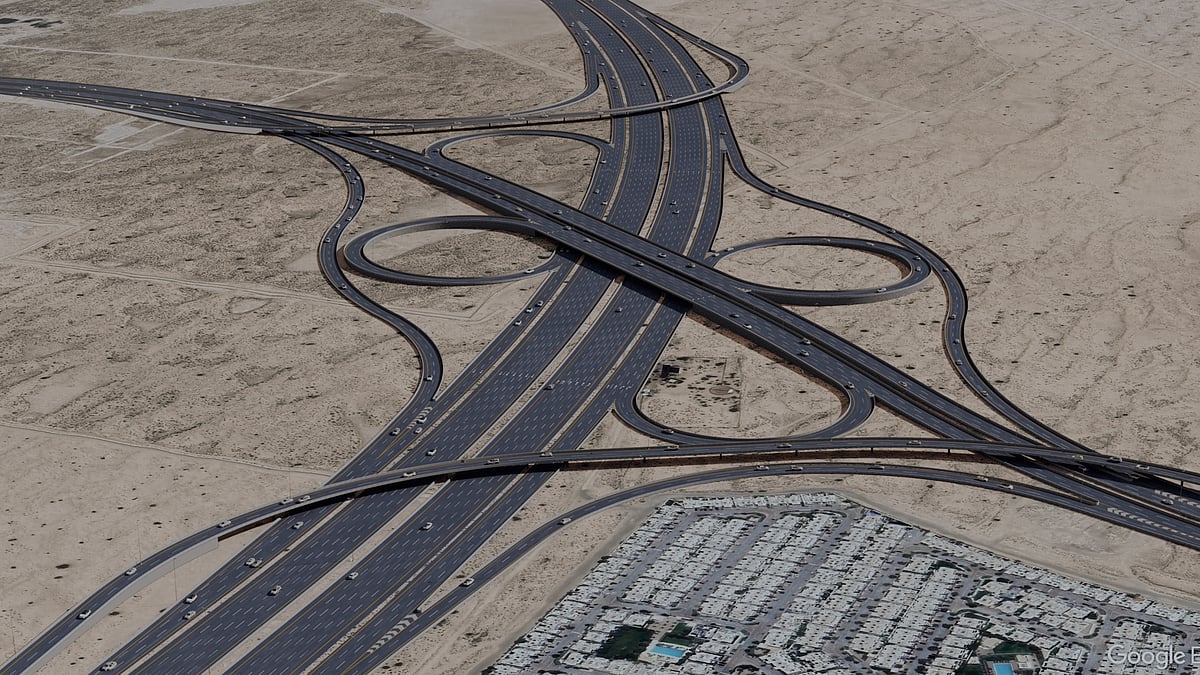
Dubai's road network has run on three spines for decades: Sheikh Zayed Road (E11), Sheikh Mohamed Bin Zayed Road (E311) and Emirates Road (E611). Together they carry more than 850,000 vehicles a day between Dubai and the northern emirates — and on a bad afternoon, all three are full at once.
On 16 September 2026, His Highness Sheikh Hamdan bin Mohammed bin Rashid Al Maktoum, Crown Prince of Dubai and Chairman of the Executive Council, approved a fourth one.
The route
The New Fourth Corridor runs 80 kilometres, from Al Faya Road in Abu Dhabi to Al Shanouf Road in Sharjah, cutting through Dubai in between. It is genuinely large-scale infrastructure, not a widening project:
| Spec | |
|---|---|
| Total length | 80 km |
| Lanes | 12 in each direction |
| Capacity | 24,000 vehicles/hour, both directions |
| Bridges | 72 |
| Tunnels | 17 |
| Drainage culverts | 45 |
Two phases, two very different travel-time cuts
The project is split for faster delivery:
Phase 1 — Sharjah to Dubai–Al Ain Road (30km). Costs roughly AED 3.5 billion, includes 2.5km of tunnels and 21km of bridges/ramps, and cuts the corridor's travel time by 60% — from 35 minutes down to 14. It serves an estimated 600,000 people.
Phase 2 — Dubai–Al Ain Road to Abu Dhabi (50km). Includes 3.5km of tunnels and 157km of bridges/ramps, and cuts travel time by 52% — 50 minutes down to 24. It serves roughly 3.1 million residents, reflecting how much of the wider Dubai–Abu Dhabi–Sharjah conurbation this single corridor touches.
Why this route, specifically
The corridor doesn't just parallel the existing three spines — it runs near Al Maktoum International Airport, through desert conservation land, and alongside the Etihad Rail corridor. That combination is deliberate: Dubai's southern growth axis (Dubai South, DWC-adjacent communities, Dubai–Al Ain Road) has been underserved by fast north–south connectivity, even as it's absorbed a large share of new off-plan supply over the past two years.
What it means for property
Two things worth separating. First, the direct beneficiaries: communities along the Dubai–Al Ain Road stretch and the wider southern corridor gain a second fast route to both the airport and the northern emirates, on top of the Etihad Rail Al Yalayis Station (opening 30 September 2026) and the ongoing Al Maktoum Airport expansion. Stacked together, that's a real connectivity upgrade for a part of the city that's historically traded lower prices for a longer commute.
Second, the structural fix: cross-emirate commuting has been one of Dubai's quieter demand constraints — plenty of buyers priced out of Dubai proper rent or buy in Sharjah and commute in, and today that commute runs through three already-saturated roads. A fourth spine with 60% faster travel times doesn't just ease congestion; it widens the realistic radius a Sharjah-based tenant or buyer will consider, which cuts both ways — easier for Sharjah residents to reach Dubai jobs, and easier for Dubai employers to draw on a larger, more affordable labour pool without losing them to the commute.
Construction timelines for both phases weren't specified in the approval announcement. As with any megaproject at this stage, the underlying case for property near the route is about optionality now and confirmed uplift later — worth tracking, not worth paying a premium for yet.
Want to know how connected a specific area is today, before this corridor even breaks ground? Ask dxbpropy.ai about commute times, nearest metro, and infrastructure pipeline for any Dubai community.
Sources: Gulf News, "Dubai approves 80km Fourth Corridor to cut travel time" and "Dubai's New Fourth Corridor: 80km Road Linking Abu Dhabi, Dubai and Sharjah", September 16, 2026; ME Construction News; MEED. Figures are indicative market intelligence, not financial advice.